
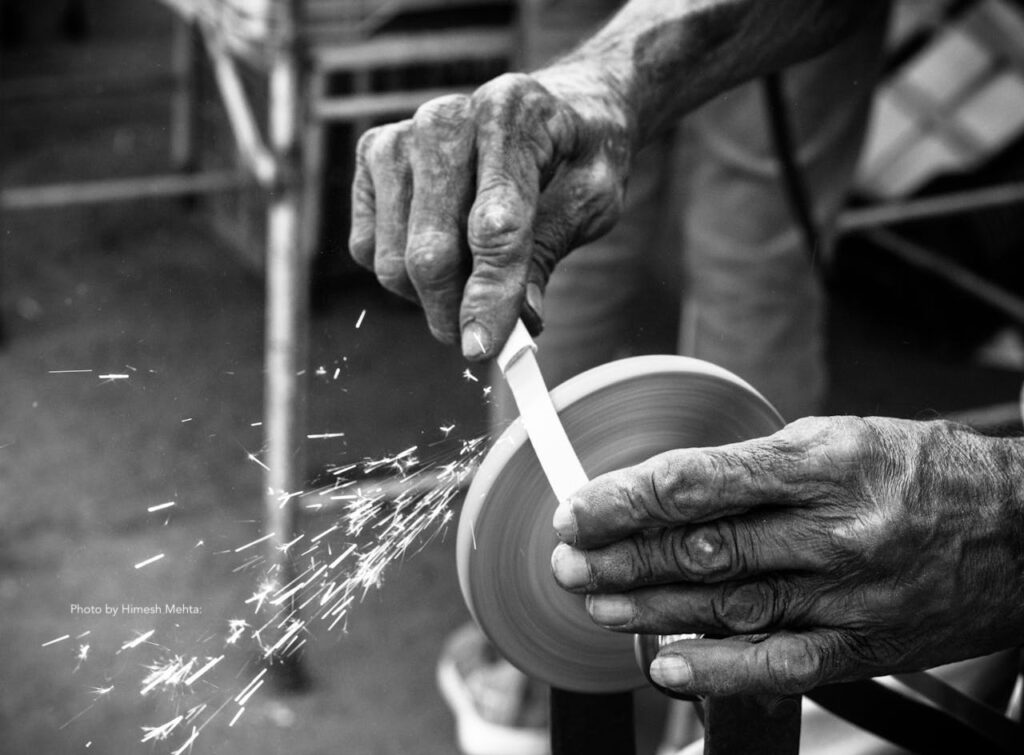
Who Are You Letting Shape Your Edge?
As iron sharpens iron, so one person sharpens another.”
— Proverbs 27:17 (NIV)
Covey’s Saw and the Pastor’s Soul
Back in 1990, Stephen Covey published his now classic The 7 Habits of Highly Effective People.
Habit #7 is: Sharpen the Saw.
Covey explained that in order to maintain effectiveness, we must regularly renew ourselves physically, mentally, emotionally, and spiritually.
Ministry is relentless. The demands are high, and the people are often hurting. We pour ourselves out weekly (if not daily), and if we’re honest, we don’t always pause long enough to check the sharpness of our own blade. We just keep slicing through the demands of the day.
But dull blades don’t cut cleanly. They tear. They fatigue. And over time, they become a liability—not just to others, but to ourselves.
The Paradox of Sharpening: Strength Meets Vulnerability
Sharpening hurts. That’s why we avoid it. True sharpening requires friction. It requires proximity. It requires a willingness to be exposed, challenged, and reshaped.
It is not natural to seek out someone who will press hard against your assumptions, test your boundaries, and challenge your methods. But it is spiritually essential.
The emotionally agile minister must learn that resilience is not just about endurance—it’s about renewal.
You need people who love you enough to help you refine your edge, even when it stings. But here’s the caveat: not just anyone gets to do that.
Be Wise About Your Whetstone
You can’t let just anyone sharpen your soul. Feedback is holy ground. So choose your advisors and mentors wisely. Before anyone can “sharpen” your ministry, they must earn the relational right to do so.
Nathan had that right with King David. But even Nathan didn’t come swinging a prophetic sword. He came with a story. He came with care. He came with divine authority—not personal ambition.
The emotionally agile leader knows when correction is needed, but they also know how to receive it. Like David, who—when confronted with his sin—did not deflect or destroy his prophet. He received the truth and repented.
That’s the strength of a leader whose heart is still being shaped by God.
Leadership Rust
I once left a pocket knife outside after an afternoon of whittling. It rained that night. By morning, the blade had rusted. Tiny pockmarks had eaten into the steel. And no amount of oil or polish could fully undo the damage.
That’s what ministry looks like when we neglect our own sharpening. Exposure without renewal leads to rust. Even water—the symbol of life—can corrode without care.
Emotionally agile ministers understand the rhythms of abrasion and rest, tension and trust, correction and compassion.
Final Words for the Sharpenable Leader
• Are you open to being sharpened?
• Who have you invited into that sacred space of accountability and growth?
• Are you living in rhythms of renewal and relationship?
You can’t do much with a dull blade. Nor can you guide others to wholeness when your own edge is chipped and corroded. You must find trusted whetstones—mentors, coaches, peers—who will shape you with grace and grit.
And one last thing: If you feel called to sharpen someone else, make sure it’s God doing the calling—not your own ego. Bring a story. Bring respect. And know when it’s time to speak the truth in love.
“True spiritual leaders don’t just lead others. They allow themselves to be led, honed, and humbled by the Spirit and the saints around them.”